Showing posts with label pricing. Show all posts

Tuesday, July 28, 2009

At-Home Beauty Devices Drive Industry Excitement | TRIA Hair Removal Laser Finds Success as a Value Alternative

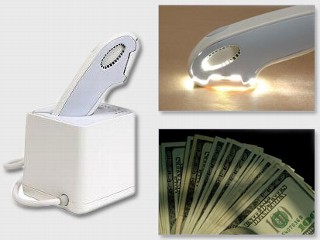
PLEASANTON, Calif., Nov. 21 /PRNewswire/ -- The most dynamic trend for the beauty industry in 2008 has been the emergence of at-home or do-it-yourself (DIY) tools -- especially those that offer benefits previously only available at a doctor's office. Although many devices concentrate on skincare solutions, a big success story has been the popularity of the at-home hair removal laser.

Historically one of the top cosmetic procedures for women, laser hair removal involves a series of treatments at a doctor's office or spa over months. As many cosmetic dermatologists are seeing decreased patient traffic in a tough economy, consumers are looking for alternatives. TRIA Beauty (www.triabeauty.com), the manufacturer of the first and only FDA-cleared laser for at-home hair removal, has noted a recent spike in sales that suggests more consumers are embracing the benefits of taking laser hair removal into their own hands.

"Sales of the TRIA Laser Hair Removal System have jumped +70 percent this past quarter as more consumers see the value of finally being able to treat unwanted hair at-home," said Kevin Appelbaum, CEO of TRIA Beauty. "The advent of true in-home laser technology offers a cost-efficient way to achieve long-term hair removal at a fraction of the cost of professional treatments."

The TRIA Laser Hair Removal System was developed by the same team of scientists that invented the professional technology back in 1993. And, it uses that same laser technology as those professional devices, which are still considered the gold-standard among dermatologists and plastic surgeons. Unlike low-powered hair removal devices that use flashlamp or broad-spectrum light to temporarily slow the re-growth of hair, TRIA is a true laser, harnessing sophisticated technology to remove hair and prevent it from growing back long term.

"Certainly, some consumers will prefer seeing a physician for laser hair removal," said Appelbaum. "However, for many more consumers, TRIA Beauty offers an attractive alternative at a fraction of the cost. With full body procedures costing as much as $5,000, TRIA can provide the same benefits for $995."

A recent increase in sales and consumer interest suggests consumers agree. Consumer interest in the TRIA laser is certainly high. Visits to the TRIA website increased over 200 percent over the past three months. The company plans significant expansion in new retail outlets next year and will add to their at-home device portfolio.

The TRIA Laser hair Removal System is currently sold in the US for $995 exclusively at Bergdorf Goodman, Studio at Fred Segal, Bliss catalogs & spas, select physicians and at www.triabeauty.com.

SOURCE TRIA Beauty

Looks like TRIA is really racking up some dough with their product.

Read More...

Friday, July 17, 2009

At-Home Laser Hair Removal. Take Aim at Unwanted Hair at Home for Cheap.

Ever since hemlines started creeping up in the early 1900s, women have been searching for the best way to get rid of the hair on their legs. Today, waxing, shaving and doctor's office laser treatments represent a $10 billion industry. Last year,1.4 million laser hair-removal procedures were performed by doctors and trained professionals. But now the FDA has approved at-home, do-it-yourself laser treatments for almost permanent hair removal. "GMA" technology correspondent Becky Worley put her own leg hair at hazard and tried out two of the products: the Silk'n and the Tria.

According to her experience, the Silk'n system, which uses a band of light to targets the hair, worked very well and the Tria, which utilizes a true laser, also showed some success.


"The idea of using a laser at home is a little scary," Worley said. "But the convenience and cost savings compelled me to give it a try. And oh yeah, the promise of never shaving my legs again? Bring on the lasers."

Perhaps even more than time, Worley saved big bucks.

Experimenting With the Laser

Introduced in the mid-1990s, laser treatment promised permanent hair removal, but at a steep price.

According to dermatologist Dr. Doris Day, a doctor's office treatment can cost anywhere from $100 to $150 per visit, meaning up to $3,000 for comprehensive treatment, depending on the surface area.

Performed by a doctor or a trained esthetician, high-intensity light is directed at the skin to destroy the hair follicle.

But the FDA has now made doctor visits optional by approving two at-home products. Both the Silk'n and the Tria cost less than $1,000 and promise safe and permanent hair removal.

According to Day, the lasers work best on people with light skin and dark hair and are not approved for use on the face.

"The FDA approved it's safe," she said, "but I believe it should be done with medical assistance. The risks of any device are burning, redness, even scarring if done inappropriately."

Worley braved the potential hazards and to conduct her experiment, she used each laser every two to three weeks, blasting the left leg with Silk'n and the right with the Tria.

"They do sting a bit," Worley said, "and leave some redness. The day after using the Silk'n, I had what looked like a road rash. It was really light. It went away within the week and didn't scar. The Tria hurt less than the Silk'n, but it covers a smaller surface so doing my lower leg took about 40 minutes. The Silk'n only took about 15 minutes."

After months of usage, Worley appeared on "Good Morning America" to report her findings first hand.

"If I had to qualify the differences in hair growth for me, I'd say that after two weeks of not shaving either leg I have 70 percent less hair on the Silk'n leg and about 30 percent less hair on the Tria leg," she said. "I haven't counted the hairs, but I have twice as much hair on the Tria side as I do on the Silk'n side."

Worley reported even better results in the bikini area.

Day said that she thought the Silk'n and the Tria were about "equally effective" and that there's no scientific data that compares them.

"The companies say after five treatments you have a 50 to 70 percent reduction in hair growth," Day said. "I expect 70 to 100 percent from office devices."

Companies' Responses

Silk'n Statement
When used according to provided directions, physician-preferred and directed Silk'n offers a safe, fast and effective way to achieve excellent hair-removal results at home.

Most users report a minimal sensation of heat, however Silk'n is designed with 5 energy settings. Successful hair reduction can be achieved without needing to use the highest energy setting.

As with shaving, waxing or any hair-removal system, Silk'n users should be careful not to overlap pulses of the device on their skin to reduce any potential discomfort.

TRIA Statement

The ultimate test of these devices is how long the results last. Devices that use low powered pulsed light like Silk'N, not laser light like TRIA, and have been shown to deliver great short term results. But the hair ultimately grows back. What distinguishes TRIA is its laser technology and its ability to provide long-term hair removal. That's because TRIA uses the same laser technology preferred by most dermatologists and plastic surgeons to provide long-term hair removal. TRIA's laser safely and comfortably delivers four times more energy than the Silk 'N. It's this higher power that is essential to delivering superior long-term results.

We're pleased to hear that Becky, like most consumers, found TRIA less painful, more cost-effective and more convenient. We're confident that when she completes the full treatment cycle, TRIA will deliver superior long term results.

By KATIE CWAYNA and LEE FERRAN

TRIA has really made a good innovation that sells and is very useful for a lot of people.

Source

Read More...

Thursday, July 16, 2009

Laser hair removal co. to pay $100K for not rendering services

A Chesterfield laser hair removal business that accepted payment from consumers for but failed to provide those services has agreed to pay $100,000 in restitution and costs under an agreement forged Tuesday with Missouri Attorney General Jay Nixon.

Laser Aesthetic Institute LLC, which did business as Sona Med Spa, sold contracts to consumers related to laser aesthetics, including laser hair removal, but violated state consumer protection laws when it received payments from consumers and failed to provide the services or refunds, Nixon said.

Any violation of the agreement could result in contempt of court proceedings and civil penalties of up to $2,000 per violation. Laser Aesthetic Institute, which is no longer in business, and its operators also agreed to pay a stipulated civil penalty of $1,000 for future violations of state consumer protection laws.

St. Louis Business Journal

You have to deliver if you promise something. Or else, you suffer the consequences.

Source

Read More...

Laser Hair Removal a Growing Trend for Teens

16 year old Julianna Romeo says, "I play a lot of sports and I'm very active so its easier that like I don't have to wake up and be like oh I have a game today I have to shave." Shaving is on her mind and not having to do it is her new concern.

Romeo says, "One time I have rushing and I cut myself on my leg, and I have a big scar there now, took a big chuck of skin out, so I really don't like to shave."

But all of that is about to change thanks to a little technology and a lot of bravery!

Dr.Neil Sadick has been seeing more and more teens turning to minimally invasive skincare procedures like laser hair removal to achieve that smooth hair-less look.

Sadick says: "I think that they know that its very painful to have waxing or electrolysis, and that laser hair removal has not been perfected and is basically painless, and gives you the most effective results."
Using a numbing mask first helps ease the patient and makes the treatment pain-free. Dr. Sadick says this is one of the reasons more teens are up for the zapping.

He also says, "The light is picked up by the pigment in the hair follicle, and it heats the hair follicle and it actually removes and destroys the actively hair follicle cells leading to long term hair removal."

This trend has both young women and men coming in for treatment. Popular areas? For the guys, the back is number one. Girls prefer to remove hair from their arms, legs, face and bikini area.

But this treatment does come with a hefty price tag, ranging from $350 to $500 per treatment which just might leave some teens reaching for a razor instead!

If the teens really want it and they can afford it, then there is really no stopping them. I just hope that the laser hair removal procedure wouldn't have any devastating effects for their young skin.

Source

Read More...

Is home laser hair removal safe?

By Carolyn Johnson

Laser hair removal is the most popular aesthetic treatment for women under the age of 35. Women over 35 like it too, only Botox is more common in that age group. A full course of treatments usually costs thousands of dollars. Now, there's a home laser device available that's backed by clinical research, but is it worth the thousand dollar price tag?

"I had hair, a full beard, real coarse hair. I had hair on my lips and on my cheeks," said Leticia Martinez.

Late last summer, Leticia Martinez began the first of six laser hair removal treatments by San Francisco dermatologist Vic Narurkar. The results were just what she hoped for.
Story continues below
Advertisement

"Before I used to get a full chin of hair, and now it's only in sporadic little spots," said Leticia.

Dr. Narurkar believes Leticia might be the perfect candidate for the TRIA, a home laser device that in her case could be used to go after those stragglers.

"You'll do a series of hair removal treatments, they might have 20 percent or 10 percent left, this is ideal so we'll send them home after their in office hair removal for maintenance with this treatment," said Dr. Narurkar.

The TRIA is backed by clinical research that found users had hair reduction of 70 percent after the second treatment. A year later, overall hair reduction was about a third of what it was to start. That compares to a reduction of about 80 percent with the professional grade lasers used in a doctor's office.

Those professional treatments are pricey. The American Society of Plastic Surgeons estimates the average cost nationwide of a single laser hair removal treatment, runs more than $400. And anywhere from three to nine treatments are needed to cover the hair growth cycle.

"So you may want to invest in the doctor's office laser hair removal where really 80 percent plus hair removal is wonderful, like facial hair or bikini line, but other areas like legs or underarms or other areas below the neck where if you can stay hair free for three months or longer, that would be the ideal patient," said Dr. Narurkar.

The TRIA comes with a safety sensor on people with darker or tanned skin. The sensor will flash red and the device won't activate because of the risk of burns.

Its lower energy, requires no special eye protection and is pain free, but it's only approved for use below the neck. The price tag for the TRIA is $995, but that's not a deterrent to Leticia.

"Yeah, at a $1,000, if it's something I can have at my house and keep me from having the hair grow back, I would think about buying it," said Leticia.

The research shows its effectiveness, but the true test will come when people like Leticia use it and decide for themselves.

"Ultimately it has to work for the consumer, it's a whole different ballgame," said Dr. Narurkar.

And expectations need to be clear. Results won't mirror those obtained by a professional.

Looks like TRIA has really catered to a need of a lot of people.

Source

Read More...

Laser Hair Removal At Home

It's one of the most popular laser skin treatments, but laser hair removal can be expensive and embarrassing.

In our Healthy Living report, a brand new device you can buy and use in the privacy of your own home.

Tria is the first home hair removal laser. It's not as powerful as a professional grade laser, but clinical studies show it works.

“It's definitely more effective than waxing or electrolysis or something like that,” said Inna Prokopenko.

Tria works much the same as a professional laser. The ideal candidate is someone who has dark hairs and light skin. It's not really meant to remove hair from large areas such as the legs. It's considered more of a touch up device.

“They've had professional removal before and don't want to run to the office for maintenance or they can do a little touch up here and there,” said Inna.

A home laser has raised some questions about safety. The manufacturer has safeguards, including a smaller instrument that checks your skin to make sure the laser will work safely.

“If the light is green, you're good to go if the light is red you're not able to use the device on your skin,” said Inna.

Since laser is less powerful that a commercial grade laser protective eyewear isn't necessary.

“The laser will not fire if it's not flat against the skin, if it's not the light that comes out will not harm your eyes,” said Inna.

The company requires a phone consultation before customers can activate the device and Gateway Dermatology who is selling Tria won't release it without a consultation, to go over safety and proper use.

“It would be a very smart thing to do a consult to look at the area first and make sure the area is appropriate,” said Inna.

The Tria retails for 995 dollars.

The Tria has become quite a popular brand for laser hair removal.

Source

Read More...

Sunday, July 12, 2009

Laser hair removal and skin resurfacing procedures still on the rise

Despite domestic concerns like inflation and a looming home lending crisis, Americans continue to spend money on plastic surgery. According to the latest procedural statistics report from the American Society of Plastic Surgeons (ASPS), almost 12 million cosmetic plastic surgery procedures were performed in 2007, a 7% increase from 2006 and a 59% increase from 2000.

Laser hair removal procedures grew 2%, from 887,000 in 2006 to 906,000 in 2007. Laser skin resurfacing saw a 32% jump in the number of procedures performed, from 263,000 in 2006 to 347,000 in 2007.

"The report tells me Americans are devoted to looking and feeling their best," said Richard A. D'Amico, MD, ASPS president. "High demand continues for less invasive and relatively less expensive procedures, but there were also promising rebounds in some surgical procedures."


This Laser hair removal and other high tech procedures are very convincing. No doubt why more people prefer this procedures than botox and wax procedures.

Source

Read More...

Saturday, July 11, 2009

Popularity of Laser Hair Removal Not Just Aesthetic

Mesa/Chandler, Arizona, as the temperature rises, valley residents will hit the pool to stay cool, which means less clothing and more skin. The East Valley Dermacare locations and What Women Want Swimwear are ushering in the warm weather with an exciting promotion.From now until the end of April, What Women Want Swimwear in Tempe will offer a free swimsuit (up to $100 value) to any Mesa/Chandler Dermacare customer who purchases a laser hair removal package. ($1000 minimum). (Not valid with any other specials or offers)

Laser hair removal is a popular option for women who are looking to achieve a hair-free body. Especially in the warmer weather months, having a bikini area that is free of hair, irritation, and discoloration is desirable.

According to Trish Gulbranson, owner of the Easy Valley Dermacare locations, laser hair removal is about more than just aesthetics, hair removal in the bikini area is very popular however this area is extremely sensitive and can often break out with other removal techniques such as shaving, electrolysis, depilatory creams or waxing.

Because of this sensitivity, it is not uncommon to see a health issue called folliculitis in this area. Folliculitis is an inflammation of the hair follicles that results in an itchy and painful rash as well as discoloration. New research has shown that laser hair removal is effective in minimizing recurrent cases of folliculitis as well as reducing discoloration and redness, which have occurred from previous episodes.

Gulbranson said laser hair removal is quick and relatively painless and our customers are extremely pleased with the long-term results.

Dermacare will be hosting an open house and fashion show March 27th in Chandler and April 3rd in Mesa from 2-7PM.The latest styles and trends in swimsuits will be modeled, prizes, food and drinks will be provided.

Dermacare Laser and Skin Care Clinics is the industry leader in laser and aesthetic skincare. Treatments at the Gilbert/Mesa and Chandler/Tempe clinics are physician supervised, and performed by trained, licensed, and certified medical and aesthetic personnel.What Women Want Swimwear is a female-owned clothing store specializing in swimsuits for women of all sizes and ages. They provide a variety of suits to create the prefect fit.

Hair removal is more focused on the bikini areas, and the laser hair removal is painless and not irritating. I think pleasing Long-term results of laser hair removal is guaranteed.

Source

Read More...

Hairy sustainability

In my adventures as an advocate for global warming solutions, I am often confronted with questions about the cost of investing in clean, renewable energy.

In light of this, I explain by connecting two hairy problems - one figurative and one literal - that most people would never tie together. Quite simply, the argument for investment in clean energy solutions is analogous to the argument for permanent hair removal.

I'll start with the hair. Many people with excessive body hair choose not to invest their money in long-term solutions such as electrolysis and laser hair removal because the up-front cost for these treatments is very expensive.

Laser hair removal is priced at a national average of $429 per treatment according to the American Society of Plastic Surgeons. Yikes. As good consumers, let's consider the options:

Staying furry is the cheapest solution, but in a country that worships the hairless, it is embarrassing and degrading to your self-esteem. (Therapy costs are through the roof, and moving to Europe would be much more expensive in the long run than laser hair removal.) Shaving is inexpensive, but the hair grows back thicker and within days, a time-consuming process that only perpetuates the problem. Do-it-yourself waxing kits can cost anywhere from $15 to $50, but they are painful and messy. Professional waxing tends to go for $15 to $60 per treatment, and the hair grows back within a month.

If you're cheap and you go with the DIY kit (say each kit lasts you for 2 waxes), four years worth of waxing is equal to one laser treatment. If you splurge a little, go for the professional waxing, and wax for two years, you will have spent more than the amount of one laser treatment. Wax for ten years, and your hair is still growing back when, for the same amount of money, you could have permanently removed it with laser treatment.

Now we transition to clean energy. The insane amounts of carbon emissions (1,000 tons every 4.9 seconds) from this country are the equivalent to an excessive amount of body hair. They are embarrassing to our appearance in the world community and they are contributing to the degradation of the overall well-being of the earth.

At the cost of future generations, we could "stay furry" and do nothing. But even factoring out global warming, oil prices are high and rising; we are completely dependent on hostile Arab nations to supply our energy, and we will run short of oil sometime in the near future. Doing nothing isn't an option.

Coal is to shaving as nuclear power is to waxing. For the time being, they are both relatively cheaper options, and each is a fast fix to the energy problem. Now, factor global warming back in. New coal-fired power plants might be called "clean," but their carbon emissions are still sky high. Nuclear energy has no carbon emissions, but the amount of water - an increasingly valuable and scarce resource - required to cool the new reactors being considered could be as high as 1,144,000 gallons per minute. Additionally, the costs of a potential meltdown are immeasurable.

Finally, we come to renewable energy (wind and solar). In the long run, the benefits of choosing clean energy outweigh the up-front costs: According to the Union of Concerned Scientists, under a 15 percent national renewable electricity standard, "consumers in all sectors of the economy would experience a reduction in both their cumulative electricity and natural gas costs compared with business as usual. Cumulative savings would reach $13 billion by 2020 and, by 2030, would grow to $27.7 billion." And that's just talking dollars. The benefits of mitigating climate change and preserving the earth for future generations are priceless.

Proliferating clean-energy technologies requires a hefty investment, and of course we can't rely on just one energy source, but renewable is the permanent solution. It is the laser treatment of global warming solutions.

All jokes aside, my point is completely serious. Investment in clean energy is pertinent in mitigating global warming, and any immediate costs for the transition are irrelevant to the unquestionable long-term benefit of ensuring a stable environment for the future.

She's right, being practical, I prefer to use laser treatments than waxing.
Source

Read More...

Wednesday, July 8, 2009

Prescription for pampering

Medical spas are the new hot spots for 'aggressive' skin care. But experts urge caution.

By Patricia King Special to The Times

Krista DAVIS is a 34-year-old self-confessed medical spa addict.

Every few weeks, she indulges herself at her favorite medical spa, Sherman Oaks-based Blue. On a typical day, she runs up a tab of $980 as she moves from manicure to pedicure, to underarm and leg laser hair removal, to Botox and to microdermabrasion, in which mineral crystals are used to sandblast the skin.

It's not cheap, but the Porter Ranch woman, a former aesthetician who now sells skin-care products, feels she gets more bang for her buck at Blue Medical Beauty Spa than she would at a traditional spa, because pampering and "aggressive" medically based beauty treatments are offered under one roof.

And it's under a roof that is far more appealing than an old-fashioned, green-walled doctor's office. Davis loves Blue's futuristic décor, including the big flat-screen televisions, the well-cushioned chairs, the sheepskin rugs and the lush, dark-blue velour curtains. Says Davis, "People don't want to go into a cold setting. They want more inviting settings."

Consumers such as Davis have turned medical spas into the hottest segment of the $11.1-billion-a-year spa industry. "The spa and the medical world are combining in a new entity," says Eric Light, president of the International Medical Spa Assn. Dermatologists, plastic surgeons and other medical professionals, including dentists and gynecologists, are either opening their own spas or signing on as consultants at existing ones.

But consumer advocates and others worry that regulation of medical spas has not kept up with the industry's growth. The U.S. Food and Drug Administration oversees the safety of the machines and skin-care products used at medical day spas. But it is up to each state to figure out which practitioners can administer the treatments safely.

That job falls mostly to state skin-care and medical licensing boards. But because of explosive growth in the medical spa industry and rapidly changing treatments, those boards cannot regulate medical spas effectively, says industry marketing analyst Nancy Griffin. "As a consumer, you can't count on your state boards to protect you."

Griffin recommends that consumers be in buyer-beware mode when they go to medical spas, because even treatments that are touted as being state of the art can damage the body if performed incorrectly.

Medical beauty treatments can also be pricier than the services at your regular old-fashioned spa. But proponents stress that the prescription-strength products and treatments offered at medical spas are more effective than the body and skin care available at a traditional spa.

Charlie Sheridan, director of the Institute in Marina Del Rey, a medical spa that offers everything from "lipstick to liposuction," says that because the facility's medical director is a plastic surgeon, it can offer pharmaceutical-grade "cosmeceuticals." These prescription products, says Sheridan, are more effective than the skin products available over the counter.

In addition, the Institute offers treatments such as Botox injections; photo facials that use intense light to combat a variety of imperfections, including large pores and age spots; and a face-lift that uses radio frequency energy. Sheridan stresses that these treatments cannot replace surgery, but that "with advanced medical technology, it is quite amazing what can be done. With injectable fillers, peel products and lasers, we can offer amazing improvement."

Manhattan's Juva MediSpa also touts its "physician-formulated spa treatments" that "far surpass the normal spa techniques." For $135, it offers a 70-minute anti-aging "medical facial" that includes "clinically proven 5-FU [5-fluorouracil, an anti-cancer drug used topically] to remove sun-damaged cells." Says dermatologist Bruce Katz, founder of Juva: "We use medicine in our facials and our body treatments. We put antioxidants into our spa oils."

No matter how "medical" beauty treatments are, insurance companies won't pay for them, which makes for a highly motivated clientele. They're "people who are serious about getting their skin into the most ideal physical and aesthetic condition," says Sheridan. "You have a client population of serious buyers, so to speak."

Cash-based medical spas also provide freedom for doctors who say they are tired of being second-guessed and under-reimbursed by insurance companies. A want ad that appeared recently on the message board of eSTART.com sought "entrepreneurially minded" doctors to work or own a medical spa in New Jersey and New York. The listing, posted by Mobius Development Group, which sells medical spa franchises and consulting services to doctors, stresses "no more hassles with insurance companies."

Dermatologist Mitchel Goldman says chucking the insurance companies he "hates" has enabled him to practice more patient-friendly medicine.

At Goldman's 15,000-square-foot Spa MD in La Jolla, there are soothing waterfalls designed using feng shui and bamboo floors, but there is no waiting room with "20 stupid chairs," as he puts it. Instead, Spa MD features a concierge who directs patients to four nicely upholstered chairs in an area called a reception room. "No one waits. I give people time."

When Goldman was accepting insurance, he packed in 40 to 50 patients a day. "It was like working in a mill." Now, says Goldman, he sees 15 to 20 patients a day. "I'm not going on volume anymore. I'm going on quality."

Doctors can avoid insurance companies at medical spas, but they cannot avoid pricey malpractice insurance coverage. With five full-time and three part-time physicians, 18 nurses, one physician's assistant and one nurse practitioner, Goldman, for example, pays $250,000 a year in malpractice insurance.

That's not surprising, given that there have been a number of lawsuits against spas that employ physicians.

In 2001, investment banker Kim McMillon filed a $125-million lawsuit against the upscale Manhattan-based Greenhouse Day Spa (now under new management), a dermatologist who worked there as a consultant and the cosmetologist who treated her. McMillon, who is African American, alleged she received first- and second-degree burns when the cosmetologist, who she said did not know how to use a laser for hair removal on dark skin, botched the job.

According to the complaint, McMillon halted the treatment halfway through because "I could smell the burning. I could feel my face on fire." McMillon also alleges that the dermatologist incorrectly prescribed a bleaching agent for her burns. The defendants have denied the allegations since the lawsuit was filed. The case is expected to go to trial in the next six months.

McMillon's attorney, Susan Karten, says the case "is really a wake-up call for states around this country" to require that laser hair removal be done by professionals with the proper credentials. Everyone from gynecologists to cosmetologists is performing the procedures, says Karten: "It's a booming phenomenon. Everyone thinks they're an expert."


Regulatory confusion

Would-BE experts are taking advantage of the hodgepodge of regulations that cover laser hair removal and other medical spa procedures.

Some states, for example, require physicians to perform laser hair removal. Others allow physicians to delegate the procedure to medical and nonmedical licensed practitioners as long as they supervise them. A few states have not yet specifically regulated laser hair removal. "It's kind of the wild, wild West," says Dr. Jay Calvert, a UC Irvine plastic surgeon who will be teaching a new course this fall about spas.

The confused regulatory picture means that consumers can become guinea pigs unless they are careful. A weekend training course offered by a company that manufactures lasers does not make a person qualified to remove someone's hair, says Calvert. Before you let someone point a laser at you, make sure you find out how much training and experience they have operating lasers, says Calvert. "You don't want to be part of someone's learning curve."

Some in the medical spa industry are so concerned about lax and conflicting regulations that they are pushing for national standards. Katz says the McMillon case was one of the motivating factors behind his decision to form the nonprofit Medical Spa Society, whose mission is to "promote standards of excellence."

"We don't want a few bad apples to start causing havoc by burning faces," says Katz.

Burned faces aren't the only side effect of botched aesthetic treatments. When the American Society for Dermatologic Surgery queried its members in 2002, 40% of respondents reported seeing more patients who had received substandard care from nonphysicians. Laser treatments topped the list of botched procedures, but the dermatologists also cited chemical peels, acne therapy and misdiagnosis or delayed treatment of skin cancers and rosacea.

According to Dr. Roy Geronemus, a Manhattan dermatologist and former president of the dermatologic society: "We're seeing a lot of scars, superficial burns and changes in pigmentation."

Consumers can sue when they believe they get substandard treatment, just as McMillon did, but most such cases do not end up in court. Some victims shy away from revealing that they received aesthetic treatments. And many lawyers believe that jurors — especially those more concerned about grocery bills and basic medical care than hair and wrinkle-free skin — will have little sympathy for the alleged victims of botched elective procedures.

Although much of the focus on preventing shoddy treatment has been on nonphysicians, industry insiders stress that undertrained doctors can also provide substandard treatment. Susan S. Warfield, chief executive of Paramedical Consultants Inc., a New Jersey-based spa industry consulting firm, warns: "Don't think that because you're going to Dr. Wonderful's medical spa, the aesthetic treatments you're going to be getting are better than Sally's salon and spa down the street."

Goldman agrees. He says consumers should be pushy when asking what type of doctor is involved with the spa. Otherwise, "The doctor could be a proctologist who doesn't know what skin is. All you have to do is have an MD after your name and you can do anything you want."

In addition, consumers need to ask how many hours a week the doctor is at the medical spa. California, for example, allows licensed physician's assistants, nurses and nurse practitioners to perform cosmetic medical procedures, including Botox injections, laser hair removal and intense light facials, if they operate under the supervision of a physician. But Goldman says medical supervision can mean that the doctor is licensed in California but lives in Utah and is at the spa sporadically. Consumers should ask: "Where is the beef? Where is the doctor?"

Karten notes that the Greenhouse Day Spa, where McMillon got her treatment, for example, "billed themselves as having medical oversight." But Karten stresses, "The question is, is that enough?"

Recently, the California Department of Corporations ordered the Los Angeles-based medical spa company HealthWest to "stop offering to sell franchises and licenses." According to the department, HealthWest was advertising that potential franchisees could "own a prestigious business in the medical industry without a medical background."

You don't have to have a medical background to own a spa, but the Department of Corporations says HealthWest failed to get approval before selling franchises and failed to disclose to the franchisees that physician supervision was necessary for some treatments.

High profits

None of the regulatory loopholes in the medical spa business is likely to put a crimp in its growth, because medical procedures generate high profit for spas. "Laser hair removal as well as photo facials spell higher profit for a medical spa, as opposed to doing wraps and massages," says Calvert.

For doctors, adding spa services can significantly expand their practice, which is why the want ad at eSTART.com touted "increased financial upside," in addition to insurance-free living. At Spa MD, for example, one of four customers who come in for a spa-side treatment eventually wind up as patients on the medical side, perhaps for a treatment for varicose veins.

Medical spas clearly offer a winning business model, but even boosters such as Light say consumers should use common sense when indulging in treatments. "Be realistic about the outcome. Anybody who promises they're going to cure your cellulite or remove every wrinkle on your face, go the opposite way."

Light even recommends that Americans take a more "holistic, European" approach to the aging process: "There's nothing wrong with a wrinkle or two. We used to call them signs of wisdom."

Nonetheless, spa-goers seem bent on wrinkle-free skin. And that is precisely why industry analysts predict a blemish-free future for medical spa profits.

Medical spas have been great for providing effective skin and body care. Consumers just have to make sure that they are going to the ones that could be trusted. Making appropriate research is advisable before proceeding to avail of the former's service.

Source

Read More...

Free SEO Meta Tag Analyzer

Search Engine Optimization SEO